
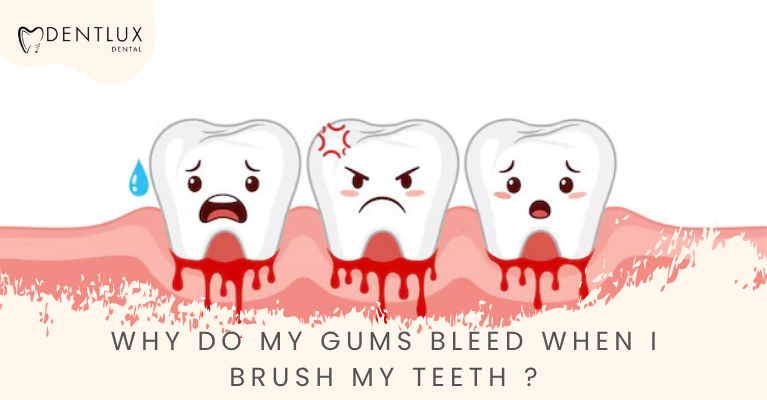
Do you often notice your gums are bleeding while brushing your teeth? If your answer is yes, then you probably have bleeding gums. Various dental problems may cause bleeding gums. Let us dive deep into what the primary causes, symptoms and their treatment are for good oral health and better gums.
Bleeding Gums
Bleeding gums are early symptoms of severe cases like Gingivitis and other forms of Gum diseases. It occurs when dental plaque, which is a sticky film containing bacteria, builds up along the gumline and causes inflammation. Bleeding gums are the primary warning sign of periodontal distress, typically signaling the onset of gingivitis or early-stage gum disease. While often dismissed as a minor side effect of brushing too hard, persistent bleeding is an inflammatory response to the buildup of bacterial plaque along the gumline that, if left untreated, can progress into periodontitis, permanent bone loss, and tooth decay.
Common Causes of Bleeding Gums
- Plaque Buildup –
If the plaque is not brushed away and then it hardens, it will irritate the gums and start bleeding when you brush your teeth. - Aggressive Brushing –
Use of a toothbrush with hard bristles or scrubbing too much can cause bleeding. - Pregnancy Gingivitis –
Hormonal changes in women can make their gums more sensitive, which leads to bleeding in the gums.
- Vitamin Deficiencies –
When your body lacks vitamins like Vitamin C and Vitamin K, which can be gained through foods like citrus, berries and whole vegetables like leafy greens, eggs and sprouts, they can be consumed. - New Flossing Routine –
If you start flossing in your routine, then your gums may bleed for a couple of days.
- Medical Conditions –
If a person has blood-clotting disorders or infections, then you can witness bleeding gums. - Smoking –
Smoking habits lead to gum problems. - Poor oral Hygiene habits –
When you are not brushing your teeth properly leads to gum problems.
Symptoms of Bleeding gums
- Redness or Swelling –
Gums look dark red instead of light pink. - Tenderness –
Discomfort when brushing or eating. - Bad Breathe –
Your breath will not be normal, instead it will have a “metallic” taste. - Receding Gums –
The gums appear to be going away from the teeth.
Gum Disease
In Gum Disease there are 2 main stages are :
Gingivitis –
This is also known as a warning sign to look after your gums and oral hygiene.
This stage is an early stage and can be reversed by simple steps and care.
You can witness Red, Swollen and Puffy gums.
The signs you can see are bleeding while you brush or floss your teeth.
This can be fixed by professional cleaning or good home care.
Periodontitis –
If Gingivitis is ignored then it changes into Periodontitis.
The inner layer of gum and bone pulls away from teeth and forms pockets which then get infected.
This infection destroys the bones, and then teeth may even fall apart.
If you ignore gum problems what will happen ?
You should never ignore the signs that your body shows you. Your bleeding can stop temporarily, and rarely it heals on its own. So the better way is to book an appointment with the Dentist to check your gums. When you take this lightly, it leads to the following loss :
- Chronic Inflammation
- Formation of Periodontal pockets
- Bone Loss
- Tooth Loss
- Systematic health impact
Treatments for Bleeding Gums
Home remedies :
- Warm Salt Water Rinse.
- Clove oil / Teetree oil.
- Hydrogen Peroxide Rinse.
- Turmeric Paste.
Upgrade your Toothbrush :
- Change to Toothbrush with Soft Bristle.
- Go Electric.
- Use Interdental Brushes.
Food Intake :
- Hydration
- Vitamin C
- Vitamin K
Professional Treatments
- Scaling –
Dentists use ultrasonic tools to vibrate the hard parts in your teeth and remove those infected parts. - Root Planning –
This is deep cleaning of roots so that the gums can reattach. - Antimicrobial Gels –
Dentists fix antibiotics or Gels directly into your gum pockets. - Laser Therapy –
Dentists use lasers to kill bacteria and stop gum bleeding instantly.
Conclusion
Taking care of your gums is just as important as taking care of your teeth. While seeing blood in the sink might seem like a minor annoyance, it is actually a clear signal that your body is fighting an infection. Whether the cause is as simple as brushing too hard or as complex as a vitamin deficiency, addressing it early is the only way to prevent permanent damage.
By maintaining a consistent routine of gentle brushing, daily flossing, and balanced nutrition, you can reverse the early stages of gingivitis. However, home care has its limits. Regular dental checkups are essential to remove the hardened plaque that a toothbrush simply cannot reach. Don’t wait for the pain to start or for a tooth to become loose—act now to protect your smile and your overall health. Healthy gums don’t bleed, so make your oral hygiene a priority today.