
A jawline is the structural outline of the lower edge of your skull, running from the tip of your chin back to your ears. Achieving a defined jawline naturally relies on reducing excess body fat, building the surrounding muscles, and improving your posture.
While you can’t avoid aging or genetics, there are some things you can do to help improve the look of your jawline. Exercising the jaw muscles helps build them up and gives your jaw a more defined look.
The Power of Proper Oral Posture
Proper oral posture, specifically resting your tongue on the roof of your mouth and maintaining nasal breathing optimizes muscle tone and prevents the downward sagging that causes a double chin .
How to Practice Proper Oral Posture
- Teeth: Bring your teeth together so they are lightly touching or just slightly apart.
- Lips: Keep your lips fully sealed and relaxed, without straining.
- Tongue: Flatten your entire tongue against the roof of your mouth (the palate). Ensure the back of the tongue (the posterior third) is also raised, but do not push against your front teeth to avoid shifting them.
- Swallow and Hold: To find the correct position, swallow while keeping your teeth together. The tongue will naturally suction to the roof of your mouth. Hold this posture continuously throughout the day and night.
Key Natural Methods to Get a Defined Jawline
- Reduce Overall Body Fat: A chiseled jaw is often hidden by a higher body fat percentage. Focus on a clean diet and consistent cardiovascular exercise to lower your overall body fat, which will naturally reduce fat accumulation under the chin.
- Targeted Jaw and Neck Exercises: Toning the muscles in your neck and jaw can add subtle definition.
- Chin Lifts: Tilt your head back toward the ceiling and pucker your lips as if kissing the ceiling. Hold for 5 seconds and repeat 10-15 times.
- Jaw Clenches: Clench your teeth together, hold for 5 to 10 seconds until you feel the muscle tense, then relax. Repeat 10-15 times.
- Chin Lifts: Tilt your head back toward the ceiling and pucker your lips as if kissing the ceiling. Hold for 5 seconds and repeat 10-15 times.
- Fix Your Posture: Poor posture such as hunching or pushing your head forward can cause a double chin and make your jawline appear softer. Keep your neck elongated, shoulders back, and head held high.
- Correct Tongue Posture (Mewing): This technique involves resting your entire tongue flat against the roof of your mouth. While results take time, it can help tighten the area under the chin.
- Facial Massages: Massaging your face stimulates blood flow, reduces puffiness, and tightens sagging skin, which temporarily makes your jawline pop.
Fix Your Breathing
To get a defined jawline, the most important breathing habit to master is exclusively breathing through your nose while keeping your mouth closed. Mouth breathing chronically changes facial bone structure, often causing a receding chin or narrow jawline, while nasal breathing supports proper facial development
This structural change occurs because a closed mouth forces the tongue to rest naturally against the roof of the mouth, where it acts as an internal support system that exerts a gentle, constant outward pressure to widen the upper jaw and create ample room for straight teeth. When you breathe through your mouth instead, the jaw drops downward and backward, the cheeks cave inward unopposed, and the muscles beneath the chin sag, which elongates the face and creates the illusion of a weak or receding jawline. By consciously switching to exclusive nasal breathing, you instantly activate and tone the orofacial muscles, pulling the lower jaw forward into its optimal alignment and lifting the under-chin tissue to immediately sharpen and define your profile.
Facial Exercises & Muscle Toning
1. The Head Lift-Up (Neck Curl-Up)
- How to do it: Lie down flat on your back on the floor. Press your tongue firmly against the roof of your mouth. Slowly bring your chin toward your chest, and lift your head just two to three inches off the ground. Then, slowly lower it back down.
- Tip: Do this slowly 10 times so you don’t strain your neck.
2. The Loud Vowel Stretch (Vowel Exercises)
- How to do it: Open your mouth as wide as you comfortably can and say the letter “O” out loud. Right after, stretch your mouth into a wide smile and say the letter “E”. Make these mouth movements very dramatic and exaggerated.
- Tip: Repeat this back-and-forth movement 15 times to stretch the muscles around your mouth.
3. The Tongue Roof Press (Tongue Twister)
- How to do it: Place your tongue on the roof of your mouth, right behind your top front teeth. Press your tongue upward tightly against the roof of your mouth to create pressure. While holding that pressure, hum out loud or make a vibrating sound with your throat.
- Tip: Repeat this a few times to tighten the area under your chin.
4. The Head Back-and-Forth Shift (Collar Bone Backup)
- How to do it: Sit up straight or lie down on the floor. Without tilting your chin up or down, slide your entire head backward a few inches, and then bring it forward again. Think of it like making a slight double chin as you pull back.
- Tip: Do this back-and-forth glide 10 times. Keep your ears lined up over your shoulders and your head straight.
5. The Lower Lip Push-Up (Chin-up)
Tip: Hold this stretched position for 10 to 15 seconds, relax, and repeat it 15 time
How a Dentist Can Help
While breathing exercises and posture adjustments strengthen the surrounding muscles, a dentist or orthodontist is the only professional who can correct the actual underlying bone and tooth misalignments caused by years of chronic mouth breathing. If mouth breathing has already narrowed your upper palate, your tongue physically will not have enough room to rest on the roof of your mouth, making long-term nasal breathing incredibly difficult to maintain without medical intervention.
An orthodontist dentist can look at your unique facial structure and step in with targeted treatments to physically widen your airway and correct your bite:
- Palatal Expanders: For younger patients, and increasingly using specialized bone-anchored techniques for adults (like MARPE), dentists can use an expander to widen a narrow upper jaw. This creates a broader smile, gives the tongue room to rest properly, and physically expands the nasal floor, making nose breathing significantly easier.
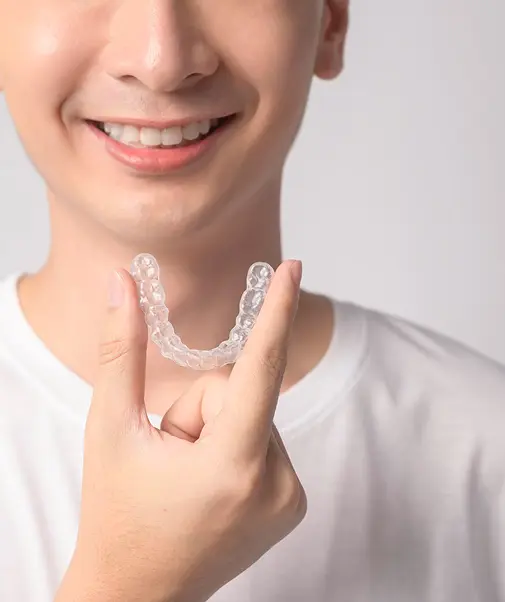
- Correcting the Bite : Mouth breathing often leads to a severe overbite or “open bite,” where the front teeth do not meet. Orthodontic treatments like braces or clear aligners pull the teeth back into alignment, allowing the lips to close naturally without strain.
- Interdisciplinary Referrals: Airway-centered dentists work directly with Ear, Nose, and Throat (ENT) doctors and myofunctional therapists. They can identify if your mouth breathing is caused by physical blockages like enlarged tonsils, adenoids, or a severely deviated septum and guide you toward the right medical path to restore your breathing and unlock a healthier, more balanced facial profile.
Conclusion
Ultimately getting a better,sharp jaw line is a process you have to stay consistent and take care of your body.Achieving a sharply defined jawline goes far beyond beauty trends; it requires a fundamental balance between how you breathe, how you rest your tongue, and how your facial muscles function. While dedicating yourself to a clean diet, targeted facial exercises, and consistent nasal breathing will dramatically tone your profile and lift the tissue under your chin, true structural limitations require a professional eye.
If years of mouth breathing have left you with a narrow palate, crowded teeth, or a misaligned bite, your tongue physically won’t have the space it needs to maintain proper posture. An airway-focused dentist can bridge this gap by correcting the skeletal root causes, permanently widening your airway, and guiding you toward a more balanced facial structure.
Book an appointment with us today to evaluate your oral posture and unlock your true self.